Entries from February 2010 ↓
February 25th, 2010 — GM, chevrolet, spyshot

Last month, GM showed off the Chevrolet Aveo RS at the Detroit auto show as a sneak peek of the upcoming compact car. Here are the first official photos of the production version.
The Aveo, whether in sedan or hatchback form, has been a source of cheap wheels for car shoppers for years, but the new Aveo looks to be a significant upgrade in style and materials. Chevrolet wants to make it something more than just an affordable choice. The design of the sedan shown here is sharp, with a handsome front end that offers something on par with Ford’s new Fiesta. The interior — shown in images below — looks to follow the trend of the Chevy Equinox in terms of improved materials and design. The offset analog tachometer and digital speedometer are unusual.

With a front end that stays true to the RS, along with a set of bulging fenders and an artfully carved swage line, the 2012 Aveo is a dramatic departure from the budget-conscious model roaming the streets today. Coupled with a thoroughly revised interior, complete with upgraded materials and the RS’ motorcycle-inspired gauge cluster, the Aveo has its sights set squarely on the new Ford Fiesta, particularly when it arrives in five-door form.
Pricing remains a question mark, but we’d suspect all the details to be revealed before the end of the year, with sales starting sometime in 2011.
February 25th, 2010 — Auto show / Motor Show, Hyundai

HYUNDAI TO PRESENT EIGHT WORLD DEBUTS AT GENEVA
Hyundai has today revealed the first photo of the all-new concept car i-flow (HED-7), ahead of its international debut at the Geneva Motor Show next week. The i-flow, which advances the ‘fluidic sculpture’ form language of Hyundai, will be joined on stage by other newcomers, including the facelifted i30 – to be launched as i30U – and a number of new, production-ready derivatives with CO2 emissions below 100g/km.
Previewing a future D-segment contender from Hyundai, i-flow boasts sleek, elegant lines which not only create a bionic, futuristic shape, but also contribute to exceptional aerodynamics. The drag coefficient of 0.25Cd helps to reduce the car’s CO2 output to just 85g/km and fuel consumption to only 3l/100km.
Hyundai’s first diesel-electric hybrid powertrain is a key factor in delivering such an environmentally-conscious return. The exciting new U2 1,7-liter engine is augmented by two-stage turbocharging and Hyundai’s Lithium Ion-Polymer battery, to give a very efficient and advanced combination, partnered with a six-speed, dual-clutch transmission.
The interior of i-flow redefines the perception of space in a sedan bodystyle, and sees the application of next-generation materials and technologies developed in cooperation with leading chemical company BASF. Fundamental elements, such as the seats and center console, have been crafted in collaboration with BASF for minimal weight and volume. The cockpit’s main interface centers around an expansive, contoured screen, which recognizes not only touch but also gestural inputs along its fascia-wide display.
The glossy ‘Liquid Metal’ finish ? developed by BASF Coatings ? adds to the visual impact of i-flow’s exterior. Special-effect pigments in this eco-friendly waterborne coating give the surface a polished metal appearance, and highlight the sculptural character of the car.
Entering mass production in March this year, the i30U takes over from the well-established i30, and incorporates a wide range of improvements in design, specification and competitiveness, as well as even cleaner powertrains. To complete the upgrade, i30U comes with the Hyundai ‘Triple5′ package, consisting of an enhanced five-year, bumper-to-bumper unlimited warranty, five years’ roadside assistance, and an annual vehicle seasonal health check for five years. The package reflects the quality and reliability of the Europe-built i30 family and gives added peace of mind to consumers.
At the Show Hyundai will also reveal the latest additions to its growing collection of eco-focused Blue DriveTM innovations. Five new production vehicles have resulted from the company’s leading-edge program: the i10 blue, i20 blue, i30 blue, i30cw blue, and ix35 blue. The new arrivals will drive the company towards its goal of global leadership in environmentally-sensitive automotive technologies.
Through innovations such as a stop-start system, low-rolling-resistance tyres and modified aerodynamics, the first four of these cars have CO2 emissions below 100g/km. The ix35 blue, meanwhile, boasts an impressive 135g/km ?a benchmark figure for a C-segment SUV. These improvements are achieved without compromising performance, reliability or driver satisfaction, making all Blue DriveTM models a realistic solution for motorists.
Looking one step beyond the blue-badged models, the ix35 FCEV moves Hyundai closer to the commercialization of hydrogen fuel cell electric vehicles. Debuting at Geneva, it features several important innovations over the previous-generation Tucson FCEV, and will lead to production volume of Hyundai FCEVs in the thousands by 2012. Among the developments implemented on ix35 FCEV are steps to reduce the cost and complexity of fuel-cell manufacturing and new approaches which simplify final assembly.
More information about Hyundai’s star cars and the latest corporate news will be made available on the stand, where media can request press kits. The company’s press conference will take place in Hall 1 at 14:15 (CET) on Tuesday 2nd March.
February 25th, 2010 — nissan, suzuki

Maruti Suzuki India Ltd., India’s largest car maker by sales, Wednesday said its recall of up to 106,000 A-Star small cars includes about 30,000 hatchbacks supplied to Nissan Motor Co. Ltd.
Maruti, the local unit of Japan’s Suzuki Motor Corp., produces the A-Star at its factories in the northern state of Haryana. The same car is supplied to Nissan–which markets the vehicle in Europe as its Pixo model–under a contract manufacturing agreement.
“We have supplied a total of 50,000 A-Stars to Nissan till date,” R.C. Bhargava, Maruti’s chairman, told Dow Jones Newswires. “The Nissan part of it (the recall) should be somewhere around 30,000 units.”
Mr. Bhargava estimated the total cost of recalling the cars to replace a defective fuel tank part at between INR300 million and INR320 million.
“The costs are to be shared between Maruti and the vendor,” he said. “Of the total cost (of the recall), Maruti will have to spend 100 million rupees ($2.1 million) to 120 million rupees.”
Maruti said that there had been no customer complaints but an internal analysis had shown that when fuel was filled beyond a certain point, there was a possibility of leakage. About half of the faulty cars have been fixed. Vehicles affected were in a batch made up to 22 August last year. The company is replacing the fuel pump gasket and O ring on affected models.
Last year, the company exported about 100,000 A-Stars after first launching the line in India late in 2008. It sells 3,500 to 4,000 A-stars a month in India alone.

Maruti said in a statement: “At Maruti Suzuki, we constantly monitor quality of our products through feedback and internal analysis. In one such exercise in November 2009, we came across an anomaly reported in the fuel tank in some of the vehicles and by December 2009 we started contacting the customers by letter. These vehicles belonged to lot made until 22 August 2009 only.”
February 24th, 2010 — hybrid vehicle, lexus

An anonymous source has e-mailed what appears to be a digital press kit produced by Lexus for next week’s Geneva Motor Show. The pages of the kit reveal photos and details of the Lexus CT 200h five-door hybrid, set for a debut at the Geneva event.

Based on the LF-Ch concept from Frankfurt, the five-door hybrid is driven by a 1.8-liter four-cylinder engine and magnet synchronous electric motor, which channel momentum to the front axle via a electrically-controlled contiously variable transmission. The motor is powered by a nickel-metal hydride battery. The car features four driving modes: EV, Eco, Normal and Sport. Coming in smaller than the Prius, the CT 200h measures 4,320mm x 1,765mm x 1,430mm (l x w x h).

Because we are talking about Lexus, the powertrain is hybrid, first violin being the 1.8 VVT-i engine and accompanied by an electric motor. The exact power is not specified, but in the brochure tis said that this model will have three running modes: Eco, Normal and Sport and that it will prove that hybrids can be athletes. The transmission will be continuously variable and will be called the E-CVT.

February 23rd, 2010 — nissan, spyshot

The coming up of Nissan Sentra is merged with Nissan Bluebird Sylphy and Nissan Tiida Latio as The Only ONE Model,cause of Main perposing of C-segment Sedan comes to Asia and US more than declind market is japan
So Now This project called L12F for Global C-Segment Sedan ,This model is revolution of Body Size nearly D-segment car as long as near 4.7 M ,Nissan make following ASIAN and US ppl needs.
Nissan L12F can made forget current Sentra,Bluebird Sylphy and ugly Tiida Latio with stylish,solid,sophisticated design.
February 21st, 2010 — Auto show / Motor Show, Mercedes-Benz

Efficiency paired with elegance:
Pioneering premium sedan with “green” technology and avant-garde design
* A reinterpretation of the concept of “fascination and responsibility”
* Multi-drive platform enables use of two alternative drive systems – either Plug-in Hybrid or fuel cell
* Intelligent display concept focusing on “electric driving”
* HMI with cam touchpad for intuitive and precise operation
* Traffic Jam Assistant for increased comfort and safety
Mercedes-Benz’ F800 Style research vehicle is showing the future of premium automobiles from a new perspective, as the five-seat premium sedan combines highly efficient drive technologies with unparalleled safety and convenience features and an emotive design idiom, which interprets current Mercedes-Benz styling in line with the brand’s hallmark attribute of refined performance.
The F800 Style has a spacious interior full of intelligent seating, operating, and display concepts. Another unique feature of the large sedan is an all-new multi drive platform, which accommodates electric drives with fuel cells (enabling ranges of almost 375 miles) as well as the use of Plug-in Hybrids that can drive for up to 18 miles solely on electricity. Both variants of the F800 Style therefore make locally emission-free mobility possible at the level of a premium-class automobile, while at the same time being fully suited for everyday driving and providing a dynamic driving experience.

“We are dedicated to reconciling our responsibility for the environment with practical customer utility in a fascinating automobile,” says Dr. Thomas Weber, the Daimler Board of Management member responsible for Group Research and Mercedes-Benz Cars Development. “The new F800 Style research vehicle combines this commitment to providing the leading innovative drive concepts with our traditional Mercedes strengths in the areas of design, safety, comfort, and outstanding performance.”
A glance into the future of pioneering premium sedans
Within the 15.5-foot external length of the F800 Style, all of the components of the vehicle’s efficient and environmentally compatible alternative drives (Plug-in Hybrid or fuel cell drive system) are installed in a space-saving manner in the engine compartment and the gaps within the chassis. Each of the drive systems takes up comparatively little space for the installation. This applies in particular to the electric drive with fuel cell, which has been enhanced by Mercedes-Benz to be compact and powerful. The front end’s compact package was made possible through the consistent downsizing of all F-CELL components. As a result, the entire interior space is preserved and offers plenty of room for five occupants.

“For many decades now, our research vehicles have been turning pioneering concepts into reality and thereby setting future trends. We set a course on the large touring sedan segment in 2007, when we presented the F700,” says Prof. Herbert Kohler, Head of E-Drive & Future Mobility and Chief Environmental Officer at Daimler. “Characteristic features of the F800 Style are its innovations, whose development is already close to the series production stage. This is true not only of the electric drive with fuel cells but also of the Plug-in Hybrid, whose components were taken from our modular system for electric and hybrid vehicles.”
Continue reading →
February 21st, 2010 — Auto show / Motor Show, Opel

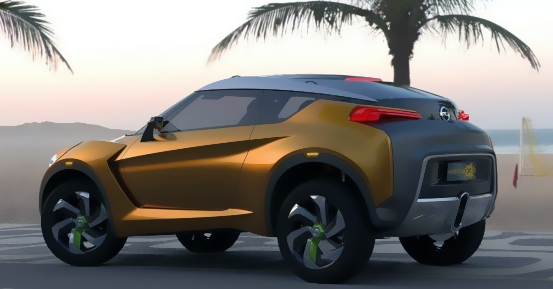
The Shape of Things to Come: Opel Flextreme GT/E Concept
World Premiere at the Geneva Motor Show 2010
Rüsselsheim. Opel will unveil its Flextreme GT/E concept car at the 80th Geneva Motor Show (March 4 – 14), that will boost the company’s credentials as a leader in green technologies, offering expressive design with efficient environmental performance – and engineered with German precision.
In Opel’s strategy for achieving more independence from fossil fuels, electricity plays a key role. The 4.7-meter long Flextreme GT/E concept illustrates how extended-range electric vehicle (E-REV) technology can be plugged into large or mid-size vehicles, as well as compact cars such as the upcoming Ampera.
Opel calls this strategy e-mobility unlimited: adapting the highly efficient E-REV drive system – which removes the limitations of battery-only power – to vehicles across all market segments. To enjoy zero CO2 driving emissions Opel-style, the Flextreme GT/E concept shows that size doesn’t matter.
The purposeful design also enables the Flextreme GT/E to achieve a projected drag co-efficient of just 0.22, which helps it reach a 200 km/h-plus top speed as well as conserve energy and extend its driving range. Stand-out visual features include a low and wide stance, wing-shaped lights front and rear, a distinctive nose and grille, floating C-pillars and muscular, sculptured bodywork.
“The Flextreme GT/E concept shows the shape of things to come from Opel,” says Frank Weber, Vice President, Corporate and Product Planning. “Bold, expressive and highly efficient, it represents the product strategy we will apply to all our future vehicles, large and small, across all market segments.”
Continue reading →
February 18th, 2010 — electric vehicle, energy news, hybrid vehicle

GM has taken a long time to bring a strong hybrid offering to market, and recently chairman Bob Lutz made it clear that the company’s decision to pursue hybrid cars is bittersweet. The 2010 Chevy Volt is a popular topic, made obvious by the amount of buzz streaming across the Internet and its already extensive waiting lists of orders.
With all of the positive publicity why then is Lutz down on hybrids? He says that GM loses money on many of its hybrids and will continue to do so in the intermediate future. Marring the future of hybrids further he also predicted that they will own a small piece of the overall car market, at 10% or less over the next 10 years!
That’s a cynical viewpoint, but perhaps based on some realistic experience. Lutz later said “for the next 10 years, that’s the way we see it! That would would be over 1.2 million units per year; at today’s price premium for plug-ins, that’s even an optimistic estimate, I think,” according to GM-Volt.
He also clarified later that he was referencing PHEV hybrids like the 2010 Chevy Volt and all electric vehicles like the Nissan LEAF. It seems that government requirements are driving a lot of GM’s research in hybrid vehicles, which wouldn’t be surprising considering how much money the company accepted in loans from the United States republic.
GM may also be benefiting from Toyota’s recent battle with defective gas petals which created mass recalls and destroyed part of its bubble of perfection. Where consumers once considered Toyota the only viable source of hybrid cars with its Prius model, they now may be considering competitors more seriously.
Exact pricing on the Chevy Volt isn’t available yet but it’s expected to be around $40,000 with about $7,000 in tax credits. They will likely be in production by the end of November 2010 but most of those will be snapped up quickly so realistically an average consumer may not have a chance to get one until 2012.
Source : taintedgreen.com
February 16th, 2010 — Uncategorized

Supermodel Naomi Campbell and sports car manufacturer Lotus Cars join forces for Haiti
In response to the horrific natural disaster that has crippled the nation of Haiti, Naomi Campbell together with Lotus Cars will be auctioning eight special edition “Naomi for Haiti” Lotus Evora sports cars, with the proceeds from the auction going to help the relief effort in Haiti.
The Lotus Evora is a very desirable, multi-award winning, high performance, mid-engined sports car that presents a fantastic piece of design to bid on. The “Naomi for Haiti” Evora sports car has been specially designed by Lotus Design Director Donato Coco and reflects Naomi’s design direction. The bespoke styling combines the flag of Haiti with a dramatic colour scheme and the cars include a full range of options, meaning these cars will all become desirable collectors items.

The “Naomi for Haiti” Evoras will be auctioned at Naomi Campbell’s Fashion for Relief TM charity fashion show on the 18th of February at the London Fashion Week venue at Somerset House. The remaining “Naomi for Haiti” Evoras will be entered into an auction run on the “Naomi for Haiti” website www.naomiforhaiti.com and bidding will commence at 0800 GMT on the 19th of February and will end at 1200 noon GMT on 28th of February 2010.
The grand total raised for the charity and the highest bidders will be announced by Naomi Campbell at the Geneva Motorshow on the 2nd of March. There will also be a link to the “Naomi for Haiti” website from the Lotus Cars website http://www.grouplotus.com/cars/home.html.
The Fashion For Relief TM event has selected to support the White Ribbon Alliance as it campaigns for the health needs and rights of women and girls around the world, especially supporting its partners in Haiti at this time to rebuild the healthcare system for mothers and babies.
Naomi Campbell says, “I am deeply saddened by the recent tragedy in Haiti. So many have been killed and severely affected by the earthquake – women and children in particular are most vulnerable in disasters. Fashion is universal, personal and touches everyone. I am delighted that Lotus Cars is supporting my Fashion for Relief TM charity and I am sure with such generous help we will raise crucial funds to help save the lives of women and children.”
Dany Bahar, CEO of Group Lotus Plc, stated, “It is a very admirable cause and we are proud to be supporting Naomi Campbell with her Fashion For Relief TM event in aid of the women and children affected by the terrible disaster in Haiti. The whole of Lotus is supporting this very deserving charity, with many working in their own time in order to raise money for the women and children affected by the earthquake in Haiti.”
The Red Cross has said that the earthquake in Haiti has affected approximately 3 million people and it is reported that upwards of 200,000 people have died in the disaster. The magnitude of the earthquake combined with the local geography and house building techniques has exacerbated the destruction.
Ends Notes
Fashion For Relief TM Set up four years ago to demonstrate the kind of contributions the fashion community can make, the first Fashion For Relief TM show was held in 2005 in New York City during their fashion week, and raised more than $1 million dollars for the Hurricane Katrina relief. In 2007 the event, held in London, raised an amazing GBP 1million for the Rotary Flood & Disaster Appeal.
In 2008, Naomi teamed up with Sarah Brown for the first time to host an unforgettable Fashion For Relief TM raising thousands for The White Ribbon Alliance and raising awareness of the charity. Last year Fashion For Relief TM travelled to Mumbai, India and Dar Es Salaam, Tanzania.
Past participants and supporters include: Beyonce, Boy George, Cheryl Cole, Cilla Black, Christian Slater, Claudia Schiffer, Erin O’Connor, Faye Dunaway, Iman, Jamelia, Jessica Stam, Kate Moss, Yasmin Le Bon, Ronan Keating, Kelly Osbourne, Lily Cole, P. Diddy, Princess Beatrice, Rio Ferdinand, The Duchess of York, Joaquin Cortes, Tyson Beckford and many more.
Haiti is the poorest country in the western hemisphere – where 37,000 pregnant women now face birth in dangerous, unsanitary conditions – White Ribbon Alliance’s partner organisation International Planned Parenthood Federation (IPPF) is currently struggling to meet the overwhelming need for basic healthcare services. IPPF’s clinics, which are based in the communities most affected by the earthquake, have been severely damaged. Despite this, they are operating a number of health clinics from tents, with additional mobile bus clinics from the Dominican Republic into Haiti. Such is the huge need that they are desperately short of staff, medical supplies and diesel fuel. In crisis situations, women and children’s health needs and physical safety are at much greater risk; we need your help to address the short term needs and the long term consequences.
February 16th, 2010 — toyota

TMC Launches Redesigned ‘Passo’
Vehicle Comes in Two Model Styles: ‘Passo’ and ‘Passo + Hana’
Tokyo-TOYOTA MOTOR CORPORATION (TMC) announces the launch in Japan today of the redesigned “Passo” compact hatchback.
The second-generation Passo further refines the highly maneuverable compact body, spacious interior and class leading1 fuel efficiency and environmental performance of the popular first-generation Passo released in June 2004, with the new vehicle embodying input, from the planning stage, from female consumers in Japan. This development has taken the Passo to the next level and demonstrates TMC’s ongoing efforts to design vehicles to meet consumer needs.

The vehicle comes in two distinct model styles: the simple and unpretentious “Passo”, which offers a sense reassurance and familiarity, and the “Passo + Hana”, which imbues an understated glamour for a strong impression. These unique designs, along with 11 available body colors, create variety that enables vehicle selection ideally suited to express individuality. Thanks to efforts made to enhance ease-of-operation, utility and drivability, including the redesign of the front pillars for better visibility and the creation of more storage space within easy reach of the driver, the vehicle is more appealing than ever-especially with its highly affordable price, which starts at 1 million yen.

The new Passo, like its predecessor, was developed in conjunction with Daihatsu Motor Co., Ltd.
Monthly sales target for Japan: 6,500 units
Assembly Plant: Ikeda Plant, Daihatsu Motor Co., Ltd.

Vehicle Outline
Wide Range of Variations to Suit User Personality
Model style: Passo
* Large lower grille and round halogen headlights give endearing front view
* Rear bumper and body highlight vehicle’s width and low center of gravity, creating sense of stability of rear profile
* Interior offers living-room-like comfort, with wallpaper-style pattern on instrument-panel top, clock-like semi-circular gauges and a simple, specially designed audio system
* Flat instrument panel emphasizes expansive breadth of vehicle, thus creating spacious cabin, while both round and square individual components convey fun and relaxation
* Simply designed front seats with built-in headrests and soft, cotton-like seat covers create comfortable interior space
* Kinari (light beige) interior creates soothing and natural atmosphere
Continue reading →