Hyundai Releases Second Photo i-flow Concept (HED-7) to be 2016-2017 Sonata

HYUNDAI TO PRESENT EIGHT WORLD DEBUTS AT GENEVA

Hyundai has today revealed the first photo of the all-new concept car i-flow (HED-7), ahead of its international debut at the Geneva Motor Show next week. The i-flow, which advances the ‘fluidic sculpture’ form language of Hyundai, will be joined on stage by other newcomers, including the facelifted i30 – to be launched as i30U – and a number of new, production-ready derivatives with CO2 emissions below 100g/km.

Previewing a future D-segment contender from Hyundai, i-flow boasts sleek, elegant lines which not only create a bionic, futuristic shape, but also contribute to exceptional aerodynamics. The drag coefficient of 0.25Cd helps to reduce the car’s CO2 output to just 85g/km and fuel consumption to only 3l/100km.

Hyundai’s first diesel-electric hybrid powertrain is a key factor in delivering such an environmentally-conscious return. The exciting new U2 1,7-liter engine is augmented by two-stage turbocharging and Hyundai’s Lithium Ion-Polymer battery, to give a very efficient and advanced combination, partnered with a six-speed, dual-clutch transmission.

The interior of i-flow redefines the perception of space in a sedan bodystyle, and sees the application of next-generation materials and technologies developed in cooperation with leading chemical company BASF. Fundamental elements, such as the seats and center console, have been crafted in collaboration with BASF for minimal weight and volume. The cockpit’s main interface centers around an expansive, contoured screen, which recognizes not only touch but also gestural inputs along its fascia-wide display.

The glossy ‘Liquid Metal’ finish ? developed by BASF Coatings ? adds to the visual impact of i-flow’s exterior. Special-effect pigments in this eco-friendly waterborne coating give the surface a polished metal appearance, and highlight the sculptural character of the car.

Entering mass production in March this year, the i30U takes over from the well-established i30, and incorporates a wide range of improvements in design, specification and competitiveness, as well as even cleaner powertrains. To complete the upgrade, i30U comes with the Hyundai ‘Triple5′ package, consisting of an enhanced five-year, bumper-to-bumper unlimited warranty, five years’ roadside assistance, and an annual vehicle seasonal health check for five years. The package reflects the quality and reliability of the Europe-built i30 family and gives added peace of mind to consumers.

At the Show Hyundai will also reveal the latest additions to its growing collection of eco-focused Blue DriveTM innovations. Five new production vehicles have resulted from the company’s leading-edge program: the i10 blue, i20 blue, i30 blue, i30cw blue, and ix35 blue. The new arrivals will drive the company towards its goal of global leadership in environmentally-sensitive automotive technologies.

Through innovations such as a stop-start system, low-rolling-resistance tyres and modified aerodynamics, the first four of these cars have CO2 emissions below 100g/km. The ix35 blue, meanwhile, boasts an impressive 135g/km ?a benchmark figure for a C-segment SUV. These improvements are achieved without compromising performance, reliability or driver satisfaction, making all Blue DriveTM models a realistic solution for motorists.

Looking one step beyond the blue-badged models, the ix35 FCEV moves Hyundai closer to the commercialization of hydrogen fuel cell electric vehicles. Debuting at Geneva, it features several important innovations over the previous-generation Tucson FCEV, and will lead to production volume of Hyundai FCEVs in the thousands by 2012. Among the developments implemented on ix35 FCEV are steps to reduce the cost and complexity of fuel-cell manufacturing and new approaches which simplify final assembly.

More information about Hyundai’s star cars and the latest corporate news will be made available on the stand, where media can request press kits. The company’s press conference will take place in Hall 1 at 14:15 (CET) on Tuesday 2nd March.

Mitsubishi Concept PX-MIEV show at Tokyo

mitsubishi-px-miev-1

WORLD PREMIERE: MITSUBISHI CONCEPT PX-MiEV
Powered by the new Mitsubishi Plug-in Hybrid System, which significantly extends the frequency a hybrid vehicle is driven in EV mode, the Mitsubishi Concept-PX* MiEV† returns fuel economy in excess of 50 km/litre. The Mitsubishi Concept PX-MiEV is a new-generation concept car that balances high environmental performance with running performance by utilizing differential motors and Mitsubishi’s all-new S-AWC (Super All Wheel Control), that utilises E-AYC (Electric-powered Active Yaw Control) which transfers torque to the rear left and right wheels. Other features include Mitsubishi’s cocochi-interior**, which provides occupants with a comfortable cabin environment, as well as many of the latest safety technologies.

* PX: Plug-in hybrid crossover. † MiEV: Mitsubishi innovative Electric Vehicle
** “cocochi” is a pun on the Japanese word for “cosy”

mitsubishi-px-miev-2

1. Design
Solid, Safe, and Simple were the keywords which drove the development of an exterior design suitable for a next-generation crossover that creates simple appearance from which all extraneous elements have been pared and that is free of the “rugged” elements typical in conventional SUVs. The headlamps and rear combination lamps use LED emitters that give the car an innovative and modern appearance as well as delivering better environmental performance with their reduced power consumption. The body uses a newly-developed metal colour that gives the car a metal shell-like appearance. Combining elements of both spoke and dish styling, the road wheel design highlights an unprecedented new look to the body as well improving brake cooling and aerodynamic performance.

The interior was designed to give an image of an airplane cockpit to improve the driver’s concentration, with an instrument panel that envelops the passengers and utilises seats that keep the passengers firmly in place. In addition, the entire instrument panel and door trim utilise soft LED lighting that express the vehicle’s innovation and refinement.

2. Mitsubishi Plug-in Hybrid System
The Mitsubishi Concept PX-MiEV’s front and rear wheels are powered by two permanent magnet synchronous motors and is also fitted with a 1.6L DOHC MIVEC gasoline engine which can power the front wheels as well as work as a generator. In addition, the vehicle comes with the newly-developed Mitsubishi Plug-in Hybrid System in which electronic circuitry automatically switches to the optimum drive mode for different driving conditions and remaining energy in the drive battery to extract maximum efficiency from the electric motors and from the gasoline engine. The Mitsubishi Concept PX-MiEV also utilises the MiEV OS (MiEV Operating System) which selects the optimum drive mode through integrated control of the EV components and the gasoline engine as well as controls optimum electrical charge and output in response to remaining battery energy through constant monitoring of the drive battery. With these, a pleasing, safe, and comfortable ride is achieved while conserving energy. In addition, to maximise effective use of the drive battery, the vehicle is equipped with a power supply mode that allows the use of some battery power to supply domestic appliances or as an emergency power source in the event of a natural disaster.

* EV mode

At low to middle vehicle speeds the Mitsubishi Concept PX-MiEV’s drive battery powers the front motor using front-wheel drive. When driving on snow, in the rain or in other low surface friction situations where maximum vehicle stability is required, the system automatically switches to four-wheel drive mode by feeding power to the rear wheel motor as well when sensors detect any front wheel slip.

* Series hybrid mode

When the remaining energy in the drive battery falls to a predetermined level the system starts the gasoline engine to generate electricity and automatically switches to the series hybrid mode using the electricity generated to power the motors. In this mode as well, the system switches to four-wheel drive by driving the rear motor depending on driving conditions.

* Parallel hybrid mode

At higher vehicle speeds the car is supported by the gasoline engine which operates more efficiently than the electric motors at high revolutions. In this mode, the gasoline engine also helps drive the wheels. When the driver makes sudden lane changes or other manoeuvres requiring greater vehicle stability the system switches to four-wheel drive by bringing in the rear motor to drive the rear wheels, improving stability. In addition when overtaking at higher speeds or in other situations requiring faster acceleration the system switches in both front and rear motors to provide additional power and assist the gasoline engine, providing high acceleration.

mitsubishi-px-miev-4

* Regenerative mode

When the vehicle is slowing or coasting down a long descending slope the system switches to regenerative mode in which kinetic energy reclaimed from the wheels is stored in the drive battery.

* Charging mode

As with the production i-MiEV, Mitsubishi Concept PX-MiEV features a 3-way battery charging system using either a 100-volt or a 200-volt domestic supply or a high-power quick-charging station. The system also incorporates a Wireless Charging Program feature that allows the owner to start charging the battery or start the air conditioner at a preset time even when away from the vehicle.

* Power supply mode

As a way to maximise the usefulness of the power stored in the drive battery based on the “Smart Grid Framework,” which garners attention as a link in tackling global warming, when not on the road the Mitsubishi Concept PX-MiEV allows the owner to store electricity at night and then use that electricity via the normal charging connector to power home appliances during the daytime when domestic electricity consumption is highest. This allows the drive battery to be used as a power source in the event of a natural disaster. Should the electricity left in the battery fall below a predetermined level, the gasoline engine starts up and works as generator to maintain the power supply at a fixed level.

A 100-volt AC auxiliary socket in the rear luggage compartment also allows the electricity stored in the drive battery to be used to power cooking or lighting equipment and other appliances when camping or engaged in other leisure activities.

Continue reading →

Officially Lexus LF-Ch Concept

2010-lexus-lf-ch-1

LEXUS PRESENTS THE LF-Ch CONCEPT

World debut for new hybrid power compact concept car at Frankfurt

KEY POINTS

* Concept proposing the first Lexus full hybrid for the European premium compact segment
* Advanced interior design with asymmetric dashboard and Remote Touch controls
* Blacked-out B-pillars and concealed rear door handles create the look of a pillarless coupé
* L-finesse exterior styling with powerful surfacing and hand-sculpted details
* World debut at the 2009 Frankfurt motor show

2010-lexus-lf-ch-2

Making its world debut at the Frankfurt motor show, the Lexus LF-Ch full hybrid concept is Lexus’s first approach to the competitive European premium compact segment.

It reflects the growing demand for cars that are smaller and more fuel and CO2 efficient, but with no compromise in levels of refinement and driving pleasure. By next year the compact segment is expected to claim the largest share of the European premium car market.

The LF-Ch concept reaffirms Lexus’s commitment to Europe, combining compact dimensions, stylish five-door, full hybrid technology and low emissions to satisfy the most demanding customer requirements and to appeal to a new, younger generation of customers.

2010-lexus-lf-ch-3

Exterior design
The LF-Ch concept presents a powerful evolution of Lexus’s L-finesse design philosophy. Rooted in Japanese culture, L-finesse is expressed in every aspect of the car, not only in the visual harmony between the interior and exterior design, but also in the combination of leading-edge engineering and technology with a user-friendly simplicity of function.

The designers focused on the careful juxtaposition of opposing major and minor elements. Intriguing contrasts are created between the powerful, machine-like overall surfacing of the bodywork and the painstaking detail of even the smallest elements, creating a synergy between technologically driven design and a fluid, hand-sculpted quality.

A new, bolder Lexus grille design sits above a deep, full-width bumper and air dam, giving a perfect balance of precision and power. The sharply sculpted, aerodynamic front wings overlap the front bumper to create deep, front brake-cooling air intakes and give the LF-Ch a powerful and purposeful wide-track stance.

In profile, the tapered side glazing, a muscular, rising beltline and a sharply truncated rear overhang project the car’s premium compact character. The steeply raked windscreen, long flowing roofline, blacked-out B-pillars and rear doorhandles integrated in the C-pillar window trim combine to give the appearance of a sporting pillarless coupe.

At the rear the trailing edge of the roof overhangs the rear window to create an integrated rear spoiler. The tailgate section has a pronounced step, which flows from the muscular wheelarches and is anchored by the wraparound tail lamp design. Aerodynamic detailing of the lower bumper smoothes airflow from beneath the car and feeds ventilation to the rear brakes.

Subtle finishing touches include discreet Lexus hybrid blue badging and sharply tapering chrome mouldings. The harmonious synergy of the design is further expressed in the contrasting, lively yellow exterior finish and calming blue interior illumination.

Continue reading →

Hyundai BLUE-WILL concept First Plug-in Hybrid Korean Car

2009_03_26_hyundai_blue-will-concept-1

BLUE-WILL – Hyundai charges in with advanced hybrid concept

* All-new concept car to be unveiled at Seoul Show
* Lithium-Ion batteries and a 1.6-litre direct-injection petrol engine
* Solar panels boost battery range

Hyundai has revealed the first pictures of an innovative plug-in hybrid concept car. Due to be revealed at the Seoul Motor Show which opens on April 2nd, the “BLUE-WILL”, has exceptionally advanced technology crammed inside its striking bodyshell.

250309-a-hyu

Recycled PET soft drink bottles were used to make the material for the headlamp bezels while use has also been made of bio-plastics: PLA for the interior while PA11 was specified for the engine cover. These materials are made from plants extract rather than fossil fuels and are bio-degradable.

The BLUE-WILL concept is powered by an all-aluminium Gasoline Direct Injected 1.6-litre engine which is coupled to a Continuously Variable Transmission and a 100kw electric motor which is at the heart of Hyundai’s parallel hybrid drive architecture.

Continue reading →

Preview : Hyundai HED-6 Concept next generation Crossover

HYUNDAI TO REVEAL SUV CONCEPT AT GENEVA MOTOR SHOW

* Design sketch reveals dynamic styling for compact SUV
* Three-door i20 to debut at Geneva Show
* First application of stop-start technology to be shown on i30 blue

Hyundai is to unveil an all-new concept car at this year’s Salon International de L’Automobile in Geneva on March 3rd. This innovative concept portrays a dramatic new look for compact SUVs and was styled at the company’s European Design headquarters in Rüsselsheim, Germany.

The world première of this new concept – codenamed HED-6 – will take centre stage on the Hyundai stand, with two other vehicles completing a hat-trick of debuts for the company.

The three-door version of the new i20 will also be shown for the first time, while the i30 blue will showcase the first application of stop-start technology on a Hyundai production car. This technology will contribute to a significant cut in both fuel consumption and CO2 emissions.

HED-6 concept car
Hyundai’s European design team has combined muscular design with everyday utility to create a car which will fit comfortably in an urban or out-of-town environment. The dramatic exterior look is enhanced by the hexagonal grille, angular style lines and piercing back-swept front headlamps, with the bold look completed by 21-inch, mirror-polished alloy wheels.

The three-dimensional, sculpted shape of the rear window is achieved using “Lexan” high-performance plastics instead of regular glass. To emphasise the dynamic flowing lines, the designers have developed a special ‘Ice Blue’ exterior paint, with an advanced pigment effect for a brilliant shine.

Continue reading →

Leaked Pictures : Audi Sportback Concept before show at 2009 North America International Auto show

Continue reading →

Volvo Teasea a Preview S60 concept interior

Volvo Cars has teamed up with world-famous Swedish glassworks Orrefors to work on the company’s next concept car, which will be a first taste of the next-generation Volvo S60. The joint creation, a floating centre stack of hand-made Orrefors crystal, will be shown for the first time at the Detroit international motor show in January 2009.

In the concept car, the graceful, crystal-clear centre stack forms a gentle, calm wave from the instrument panel all the way to the rear seat backrest. “It almost looks like a waterfall from the instrument panel, flowing through the centre of the car,” says Volvo Cars design director Steve Mattin.

The crystal panel appears to float above the centre console’s functions and controls. It rests softly on rubber pads and with the help of invisible light sources the crystal’s shimmering glow can be tailored to match the driver’s mood. “If you want to explore the full scope of Scandinavian design, Sweden’s glassworks are a natural source of inspiration. Large glass areas are very much part of modern Swedish architecture, creating the special, light transparency,” says Steve Mattin.

He adds: “In a concept car, you are able to release your imagination and creativity. Our iconic, super-thin centre stack was the perfect subject. We reinterpreted it and gave it a refined new form. Then it was up to Orrefors to use their superb skill to transform our exciting vision into reality.”

Hand crafted down to the smallest detail
The experts at Orrefors were keen to take on the challenge and the result is one of the most unusual and labour-intensive objects in the company’s 110-year history. Producing the stack was a challenge – even for the experienced experts at Orrefors. Traditionally, the moulds for the crystal are first chiselled by hand from thick planks of alder wood. After casting, the glass is carefully polished to produce its final, crystal-clear lustre.

“The undulating, slightly twisted shape and the precise dimensional requirements were two exciting challenges we had to face. Crystal is a living material, shaped by living people. We are not used to working with tolerances of tenths of a millimetre. What is more, we’re talking here about an exceptionally large piece of glass,” explains Orrefors design manager Gunilla Arvidsson.

Crystal-like future plans
In order to meet the relevant strength standards, the finished piece consists of three sections joined together at the Volvo Cars concept car workshops. “The full-size crystal piece in the concept car will not be a production feature. However, it does open up opportunities to use crystal on a smaller scale in the future. We’ll have to see how our customers respond,” says Steve Mattin.

Continue reading →

Officially Chevrolet GPiX Concept at 2008 Sao Paolo motorshow

Chevrolet Reveals the GPiX Crossover Coupe Concept

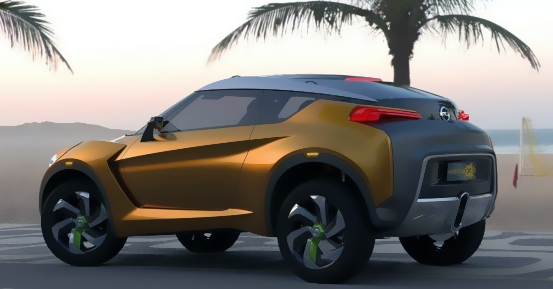
Sao Paulo, Brazil – General Motors revealed the Chevrolet GPiX crossover coupe concept today at the 25th edition of the Sao Paulo International Auto Show. The Chevrolet GPiX concept was developed by General Motors Design in Brazil and represents a potential new segment for GM in the Mercosur region.

The GPiX concept features a two-door body style with high ground clearance appropriate for the types of roads and conditions found in emerging markets. “It offers the sporty design and versatility necessary for a country with the continental dimensions of Brazil,” said Carlos Barba, General Director of Design for GM Latin America, Africa and Middle East.

GPiX also combines Chevrolet’s global design “DNA” with the cost-benefit proposition necessary to compete in today’s emerging markets. Jaime Ardila, President of General Motors Brazil and Mercosur said, “with this project, the Chevrolet GPiX concept could result in the development of many models for Brazil and the Mercosur region.”

Continue reading →

Fiat Brazil to present electric Bugster Concept at Sao paulo

October 21, 2008 – Fiat Automóveis will present at the 25th Salão Internacional do Automóvel, which is set to take place from 30 October up to 10 November in São Paulo, a brand new concept car, that has been dubbed the Bugster, and which has been totally developed by automotive engineering division of the Italian carmaking brand in Brazil.

Bugster is a vehicle that seeks to unite two concepts that are very relevant today, the environment and fun, as it is a rich mixture of ecologically-correct components as well as being a fun car to drive. Besides the futuristic design, the concept is fitted with a zero-emission producing electric engine, and its bodyshell is constructed using only natural fibres, renewable sources that have less impact on the environment, and nanotechnology to build lighter and more resistant pieces.

Continue reading →

Chevrolet Orlando concept show rear back

eXTReMe Tracker
Automobile blogs