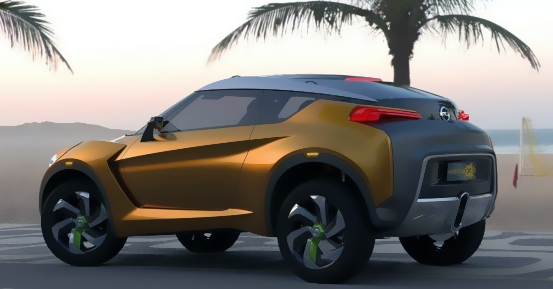
June 11th, 2009 — TaTa, eco-car segment

Tata Motors Ltd said on Wednesday its 5-billion-baht ($147 million) project to produce an “eco car” in Thailand by 2012 was still on track.
Ajit Venkataraman, chief executive of Tata’s Thai unit, dismissed local newspaper reports that the Indian car giant may be wavering on its Thai project.
Tata is one of six foreign carmakers applying for government incentives to manufacture mini passenger cars with at least an annual production capacity of 100,000 units, he told reporters. “We have made long-term commitments to Thailand and are a part of its automobile industry with plans to extend our product lines to include commercial vehicles and buses as well as eco-friendly, affordable small cars,” he said.
The Tata executive said its Thai eco-car would be an entirely different vehicle from the company’s Nano model, billed as the world’s cheapest car, that has attracted more than 203,000 bookings in India since April.
Nano production will start in early 2010 and full production will be achieved by late next year.
“Our eco-car project is going through its development process. We have several engine-size options, a decision to be dictated by market demand,” he said, referring to a government requirement for the car to be powered by up to 1,300-cc engines.
Other companies applying to invest in Thai eco-car projects are Toyota Motor , Mitsubishi Motors , Nissan Motor , Honda Motor and Suzuki Motor (7269.T).
Tata has sold nearly 600 one-tonne pick-up trucks since it entered the Thai market about a year ago. Venkataraman hoped to achieve, within five years, a 5 percent share of the Japanese- dominated segment in which 334,282 trucks were sold in 2008.
Tata and its local partner, Thonburi Automotive Assembly Plant Co, have invested in a 1.5-billion-baht joint venture to produce light trucks at Thonburi’s eastern Bangkok suburban plant.
Source:Reuters
March 24th, 2009 — TaTa

Reporting from New Delhi — With the flash of cameras and oohs and aahs from the crowd, an Indian company Monday launched what is billed as the world’s least expensive car, six years after it was conceived and six months behind schedule.
The Nano will start at $2,200 after taxes and dealer costs, while the more expensive CX and LX models with heat, air conditioning and power brakes will go for as much as $3,800.
None of the models, made by India’s giant Tata conglomerate, carry air bags or anti-lock brakes. But they will meet or exceed all Indian safety standards, company officials said.
“I hope it will provide safe, affordable four-wheel transportation to families who until now have not been able to own a car,” Ratan Tata, company chairman, told reporters.

Amid the applause and homegrown pride at India’s accomplishments, however, some here expressed concern about the environmental impact of a “people’s car” so inexpensive that it will be within reach of millions more people, further clogging the roads and polluting the air.
“At this time, when India is just beginning to motorize, it’s absolutely essential that we grow differently and not become as car-centric as the rest of the world,” said Anumita Roychowdhury, associate director of the Center for Science and Environment in New Delhi. “It’s a natural aspiration that people want to own a car, but it’s important to offer public transportation options.”
The initial focus will be on the Indian market and its rising middle class, but the company plans to roll out a more expensive European version in 2011 with air bags and better emissions and safety ratings. It may also consider a model for the U.S. market.
China’s Cherry QQ car sells for about $4,800 and India’s Suzuki Maruti 800 for about $5,000. The least expensive U.S. car is the basic Chevrolet Aveo, with a nearly $12,000 base price. Nissan offers its subcompact Versa model in the U.S. at a base price of $9,999.

Tata Motors, which last year bought Jaguar and Land Rover, has seen its debt soar in recent months, as have carmakers around the world. To help ease its cash squeeze — the company suffered its first loss in seven years last quarter — it is taking sizable advance deposits.
Protests by farmers and a politician’s hunger strike last fall forced the company to shutter its main Nano factory in West Bengal state, delaying the launch by half a year. Since then, the global economy has deteriorated significantly.
Tata said it would hold a lottery starting April 9 for the 1 million applicants vying for the 60,000 or so vehicles expected to be produced in the first year. Those who are selected will be asked to put up a deposit of as much as 80% of the price. Delivery is to start in July.
Continue reading →
February 27th, 2009 — TaTa

Tata Motors on Thursday announced that the much-awaited Tata Nano will be launched at a function in Mumbai on March 23, 2009.
The cars will be on display at Tata Motors [Get Quote] dealerships from the first week of April 2009. Bookings will commence from the second week of April 2009.
Since it’s unveiling on January 10, 2008, the Tata Nano has evoked an unprecedented interest in the country, with its Web site having recorded over 30 million hits in the past one year and the creation of over 6,000 interest groups and communities.
Tata Motors is making arrangements for the widest possible network to book the car, so that prospective customers can conveniently avail of booking facilities at their locations, across the length and breadth of India. The booking process and other details will be announced on March 23, 2009.
January 22nd, 2009 — TaTa

Mumbai-based Tata Motors (NYSE:TTM), a subsidiary of the Tata Group, said today it plans to spend Rs 2,246 crore ($453 million) to start production of its Nano car in the western state of Gujarat, doubling its investment in its low-end, highly efficient vehicle.
The Nano—which is being billed as the world’s smallest, cheapest car—is a gas-powered, manual transmission, four-seated vehicle expected to sell in India for one lakh ($2,500 USD) (see Hyundai introduces competitor to India’s Nano minicar).
Tata chose Gujarat for the Nano plant after violent protests halted construction of the factory in Singur, West Bengal, in August when it was 90 percent complete (see Tata Motors moves Indian Nano plant). In addition to the Rs 2,246 crore to build the new factory, Tata said the shifting and relocation of the Nano plant will cost Rs 650 crore.
Tata now says it plans to roll out the Nano starting in late February from its existing factories in Pune and Pantnagar, with about 7,000 vehicles produced by the end of the fiscal year on March 31. The company then plans to produce 80,000 Nanos in its next full fiscal year.
The Sanand facility in Gujarat is expected to come online in the first quarter of fiscal 2010-11, with Tata aiming to produce 150,000 a year, which was the initial goal for the Nano before problems arose with the Singur factory. The original rollout of the Nano was planned for October 2008.
Last year, Tata said it spent nearly Rs. 1,500 crores ($338 million) to build the Singur factory, 45 miles outside Kolkata. About 60 suppliers collectively spent about Rs. 500 crores ($112.7 million) to locate on the Singur complex (see India’s Tata Motors reveals electric car prototype).
Residents held violent protests demanding the return of 400 acres of land that farmers said they were forced to cede for the factory.
January 3rd, 2009 — TaTa, hybrid vehicle

The world’s cheapest car, Tata Nano, may also turn out to be world’s cheapest hybrid version as well. Tata Motors intends to offer micro-hybrid version of Tata Nano with micro-hybrid technology that allows the vehicle to reduce fuel consumption and emissions by up to 10 percent.
According to a leading Indian news channel, Bosch shall provide the micro-hybrid technology to Nano also known as Start-Stop System. This system allows the engine to automatically turn off when the vehicle is not moving. This additional technology may cost another Rs. 4000 to Rs. 6000 to the overall cost but this technology is definitely the cheapest hybrid technology most suitable for the world’s cheapest car.
Most of the countries around the world are getting stricter with fuel consumption and emission norms including Europe and the US. This micro-hybrid technology can b deployed to the vehicles at much lower cost than full hybrid systems. The micro-hybrid technology will also be available in diesel and electric variants of Nano.
source:cartraseindia
December 15th, 2008 — Auto show / Motor Show, TaTa

Tata Motors (Thailand) Co Ltd is expecting sales of its vehicles in Thailand to increase in the period from the year end through to 2009.
The company’s confidence is borne out by the number of orders attracted at the Thailand International Motor Expo for the Xenon 2.2-litre common-rail diesel and the Super CNG with its combination of economic fuel use and low emission levels.
“The recent Motor Expo gave us an effective platform on which to present new experiences to our customers and visitors to the show,” said Abhichet Sitakalin, Sales Director of Tata Motors (Thailand) Co. Ltd.
“With the realization that Tata’s new technology was significantly different from others in the market; customers added the Xenon pickup to their list of choices when making the decision to purchase a new truck.”
The main factor that persuaded customers to place orders was the new, economical technology that would lead to savings on fuel and low maintenance costs, and eventually, to increased income.
Tata sold a total of 101 Xenon trucks in both diesel and CNG versions at the Motor Expo. In addition, sales through dealerships around the country have been rather satisfactory.
The positive customer reaction at the Motor Expo indicates that during the period from the end of the year through to next year, Tata sales will continue to grow. The company plans year-end activities at Chiang Mai, Khon Kaen, Udorn Thani and other provinces in order to reach customers in rural areas and introduce Tata products to potential customers.
“Corporate customers are another important group who depend on large numbers of vehicles for delivery,” said Abichet. “Many companies are now expressing the intention of switching to CNG vehicles, and although oil prices are on the low side at the moment, the price is sure to rise in the future – and it’s the future that these companies are looking to in terms of economy and value for money.”
November 24th, 2008 — Auto show / Motor Show, TaTa

Tata Motors (Thailand) is launching the Xenon Super CNG pickup truck at the forthcoming Bangkok International Motor Expo 2008, starting November 29. The TATA Xenon Super CNG is Thailand’s first pickup truck with a factory-installed 100-per cent CNG system. It offers one of the better energy-saving options available in Thailand and therefore one of the more cost-effective alternatives for the Thai customer.
The Xenon Super CNG X-tend Cab CLE is being introduced at a special price of ฿ 519,000.
Speaking on the introduction of this first-of-a-kind pickup vehicle, Mr. Ajit Venkataraman, Chief Executive Officer of Tata Motors (Thailand) Co Ltd, said, “We are very pleased to be a part of Thailand’s automobile industry and to provide options to Thai customers that are both innovative and distinctive. Tata Motors’ pickup trucks are designed keeping in mind the requirements of pickup vehicle customers – low operating cost through low fuel consumption and low cost of maintenance. Vehicles that use alternative fuels, especially compressed natural gas (CNG) like the Tata Xenon Super CNG, are going to be more advantageous as the government’s policy is to maintain CNG price to at least half of the price of diesel. We are confident that customers will find the Xenon Super CNG a vehicle of their choice.”

The Xenon Super CNG comes with a 2.1 litre, DOHC multi-point injection engine with a maximum output of 115 hp and a maximum torque of 175 nm at 3,750 rpm. Its CNG system and components are state-of-the-art. The gas line is from Sandvik (Germany) and Swagelok (USA), the cylinder valve is from OMB (Italy) and the ECU processes data through various Bosch (Germany) and Valeo (France) sensors.
Compression ratio of the engine is appropriate for CNG. This ensures that combustion in the engine is always smooth. In addition, the engine is durable, fuel efficient and easy to maintain.
Continue reading →
October 26th, 2008 — eco-car segment

Tata Motors (Thailand) is planning to make substantial investments for its eco car project following approval from the Board of Investment (BOI) in April. The company is working with the BOI to finalise the project details.
The government’s eco car policy mandates all manufacturers to meet stringent emission and safety requirements, including the Euro 4 emission norms and crash compliance. Tata Motors is in the process of developing the vehicle to meet these requirements as well as local customers’ preferences.
The company is evaluating land options with several industrial estates as a 500 rai plot will be needed for the construction of the manufacturing facility.
According to the regulations, all manufacturers should start their eco car productions within 66 months of project approval. Tata Motors plans to start production within this timeframe.
October 12th, 2008 — TaTa

Call it coincidence or history repeating itself, the world’s least expensive car ‘Nano’ is likely to be rolled out around the time Ratan Tata celebrates his 71st birthday on December 28, just as the ‘Indica’ was launched a decade ago when he turned 61.
According to informed sources, Tata Motors is working on a plan to launch the ‘People’s Car’, as Tata fondly refers to, to coincide with his birthday with about 10,000 units being readied to be rolled-out from the company’s facilities in Pune and Pantnagar.
Vendor sources also said, already parts for about 12,000 units of Nano have been dispatched to Tata’s both Pune and Pantnagar facilities.
They added that initially only the base model of Nano would hit the roads this year.
Continue reading →
October 10th, 2008 — TaTa

Tata Motors today announced the launch of three new fully loaded variants on its popular Tata Indigo CS range. The Tata Indigo CS – Compact Sedan, launched at the Auto Expo at New Delhi in January 2008, has received an overwhelming response from customers across the country making the Indigo range clock over 84% growth this fiscal at an average of 4,400 units per month.
The new variants are the petrol GLX model and two diesel LX models – in the Turbo-charged Diesel with Intercooler and DICOR (Direct Injection Common Rail) engine options. All three models will offer front and rear powered windows, a rear windscreen defogger and central locking to enhance customer comfort and security. The exteriors of the car on these variants will sport classy looking body coloured rub-rails with chrome inserts and body coloured ORVMs (Outer Rear View Mirrors). The interiors – beige for petrol and charcoal black for diesel – will offer a new look front console. The premium seat fabric and sporty leather-wrapped steering wheel will further add to the plush feel inside the cabin.
Continue reading →